Effort-based Decision Making

Motivation is a key determinant of effort-based decision-making. How individuals make these decisions depends both on their characteristics and those of the environment. In the MED lab, we systematically examine individual differences in motivation to exert effort under different reward-punishment contingencies, employing well-established mental effort decision-making paradigms (based on the tasks developed by: Vassena, Deraeve, et al., 2019; Vassena et al., 2014, 2015). Next to manipulating rewards and punishments, these tasks allow us to vary environmental controllability, which determines how well individuals can influence environmental outcomes through their choices. Given the links between motivational impairments, maladaptive effortful decision-making and stress-related disorders, we aim to clarify how altered sensitivity to reward, punishment, and controllability contributes to stress-related psychopathology.
Computational Phenotyping of Motivation
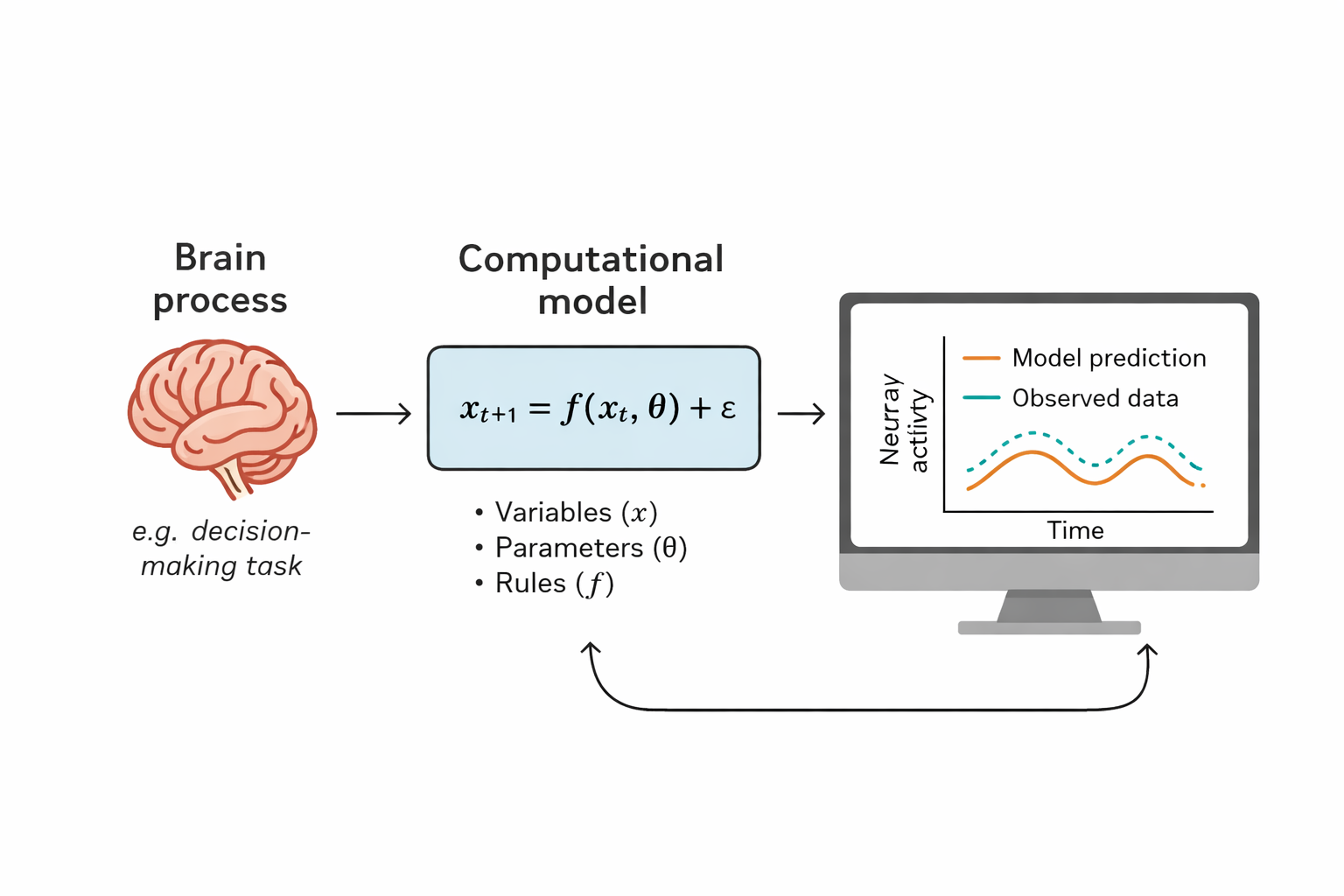
We use neurobiologically plausible computational models of the brain to characterize individual profiles of cognitive and motivational functioning, a process called computational phenotyping of motivation. This approach enables us to identify individuals at risk for stress-related disorders, such as anxiety and depression, and to guide the selection of the most suitable (preventative) treatment based on these profiles. Alongside these studies, we use computational modeling to examine how individual differences in motivation shape human action and decision-making.